
The Tower of Babel is a biblical story symbolically addressing the origins of linguistic diversity. However, historical and archaeological evidence conclusively show it cannot be taken as a literal account.
1. Early Language
Taking the bible literially – the Tower dates to around 2200 BCE (2242–2206 BCE per Ken Ham). This is far too recent to explain the origins of language. The oldest known languages predate this by millennia:
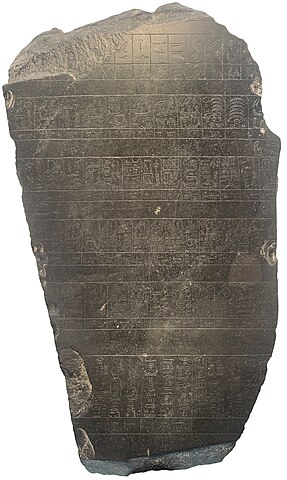
- Written languages: Sumerian, Egyptian, and Indus scripts emerged by 3500–2400 BCE, that’s not controversial, you can see examples in any museum.
- Spoken languages: And spoken language obviously goes back much further. The Afroasiatic language family originated 12,000–18,000 BCE.
2. Global Human Dispersal
It is also impossible to accept the claim that people had not yet scattered all over the world. There is overwhelming evidence of continuous culture in various parts of the world long before and after the tower’s supposed construction.
For example, there was a continuous (ie not interrupted by a global flood) culture in Australia from 20,000 BCE to 1500 CE, sites in Mexico continuously inhabited by the same people from 7000 to 1400 BCE, and the Jomon culture in Japan from 10,000 BCE to 1000 CE.

Conclusion
The Tower of Babel serves as a cultural allegory. Linguistic diversity and human migration predate the story by millennia, as evidenced by archaeology and historical linguistics.
Further reading:
That’s just a few of the reasons its impossible that the Babel story it is historical. For more on this, look up:
1) Sumerian language origin story: ‘Enmerkar and the Lord of Aratta’.
2) Look up the history of early languages. And no, PIE (Proto Indo-European) is not ‘the original human language’ as one RPCI minster recently claimed (clue is in the name). He also surprisingly used this as a jumping off point to attack the EU and the WHO…

3) Ask interesting questions of the text.
- What does it mean that: ‘Yahweh came down to see the city and the tower’?
- What is Yahweh’s fear when he says: ‘If as one people speaking the same language they have begun to do this, then nothing they plan to do will be impossible for them.’
- What does God think about us now building sky scrapers, going to space, learning multiple languages, or using google translate?
- Does this really sound like something god cares about, or is it just a fun little bit of mythology?
 Deconstructing Inerrancy
Leave a comment